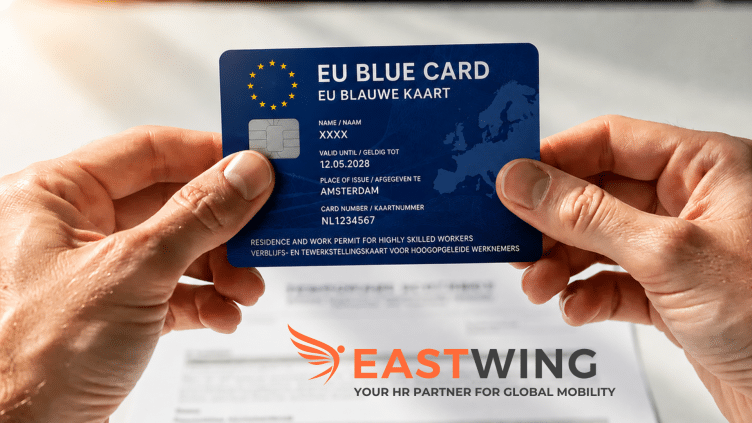


As an international professional moving to the Netherlands, the 30% ruling offers an attractive tax facility. However, this ruling also creates specific administrative obligations that both employers and employees must comply with. From correct payroll administration to maintaining essential documents, compliance with Dutch tax legislation requires meticulous administration. Failure to meet these obligations can lead to fines, additional assessments, and even the loss of the 30% ruling. In this article, we will walk through all administrative aspects you need to know to remain fully compliant with the regulations.
What exactly does the 30% ruling entail?
The 30% ruling, also known as the expat ruling, is a tax facility introduced by the Dutch government to attract highly educated foreign specialists. This ruling allows up to 30% of your gross salary to be exempt from Dutch taxation, which can significantly increase your net income.
To qualify for the 30% ruling tax facility, you must meet specific conditions. You must possess specific expertise that is scarce in the Dutch labor market and earn a minimum salary. For 2025, this minimum annual salary amounts to €46,660 (after application of the 30% ruling). For professionals under 30 years old with a master’s degree, a lower threshold of €35,468 applies.
Additionally, you must have been recruited from abroad and have lived more than 150 kilometers from the Dutch border for at least 16 of the 24 months preceding your first working day in the Netherlands. Scientific researchers at recognized research institutions are always entitled to the ruling, regardless of their salary.
Obligations for employers regarding payroll taxes
Employers have extensive administrative obligations when applying the 30% ruling in their payroll administration. Correct processing begins with obtaining a valid decision from the Tax Administration before the ruling is applied.
In payroll processing, the employer must correctly split the gross salary: 70% is taxed at regular rates, while 30% remains exempt from payroll tax. This exemption must be clearly administered and reported to the Tax Administration through the monthly payroll tax return.
Employers must also draft a written agreement in which both parties confirm they are aware of the consequences of the 30% ruling. This agreement must be added to the employment contract and retained for potential audits.
Importantly, employers must prepare a written statement confirming that the employee’s skills are scarce and that they have not succeeded in finding a comparable candidate in the local market. This statement must specifically mention how many applicants there were and how long the position remained vacant.
Annual tax return obligations for employees
Employees with the 30% ruling have specific obligations when filing their annual tax return. While you may not be required to file a return if you only have salary income from Dutch employment, it may be advantageous to do so.
When completing your return, you must correctly indicate the 30% ruling. The exempt portion of your salary is not reported as taxable income but must be mentioned in the designated fields. This is crucial for the correct calculation of your tax liability and any benefits.
An important aspect is the choice for partial foreign tax liability for box 2 and box 3. However, this option expires on January 1, 2025, meaning you will have to pay the same box 2 and 3 taxes as regular Dutch residents from that date.
The deadline for filing your tax return is May 1 of the year following the tax year. For complex situations, you can request an extension until September 1.
Which documents must you maintain?
Maintaining proper documentation is essential for compliance with the 30% ruling. You must retain all relevant documents throughout the entire period of application and for five years thereafter.
| Document type | Retention period | Purpose |
|---|---|---|
| Tax Administration decision | 5 years after end of ruling | Proof of 30% ruling approval |
| Employment contract with 30% clause | 5 years after end of ruling | Contractual basis for application |
| Pay slips | 5 years after end of ruling | Proof of correct payroll application |
| Proof of foreign residence | 5 years after end of ruling | Demonstrate compliance with distance criterion |
| Curriculum vitae | 5 years after end of ruling | Proof of specific expertise |
Additionally, you must have a valid identity document (not a driver’s license), your BSN number, work permit if applicable, and company details of your employer including payroll tax number. Proof of residence abroad prior to your employment is crucial for demonstrating compliance with the 150-kilometer rule.
Common mistakes and compliance risks
Failure to comply with administrative obligations can lead to serious compliance risks. One of the most common mistakes is applying the 30% ruling without a valid decision from the Tax Administration. This can result in additional assessments on the entire exempt amount, including fines and interest.
Employers often make errors when calculating the minimum salary. It is important to remember that the salary after application of the 30% ruling (i.e., 70% of the gross salary) must meet the threshold amounts, not the full gross salary.
Another common problem is not timely applying for extension when changing employers. If you find a new position within three months after termination of your previous job, you must submit a new application within four months of starting your new job.
From 2024, a maximum salary of €233,000 per year applies to which the 30% ruling can be applied. Income above this amount does not qualify for the tax exemption. For employees who have been using the ruling since 2022, this limitation only applies from January 1, 2026.
Incorrectly administering the transitional arrangement introduced in 2024, where new users follow a phase-out schedule (30% for 20 months, 20% for 20 months, 10% for 20 months), can also lead to compliance problems.
For organizations looking to optimize their global mobility processes and minimize compliance risks, it is advisable to regularly conduct a thorough evaluation of all procedures and administrative systems. This helps identify potential bottlenecks before they lead to problems. For professional assistance with these complex matters, please contact our tax specialists.