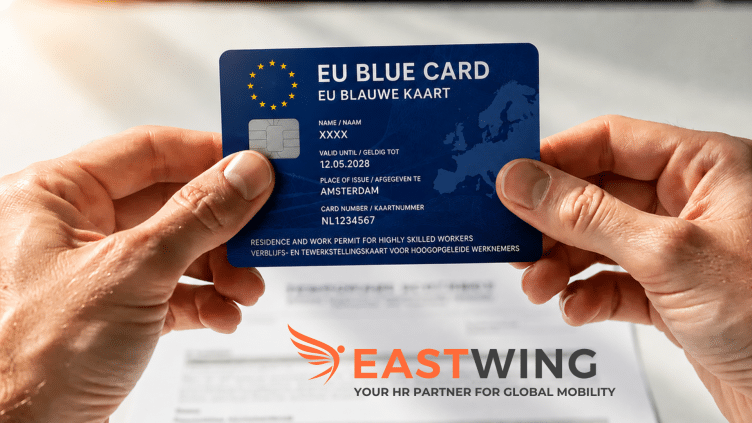


As an international professional moving to the Netherlands, you will undoubtedly encounter the term 30% ruling Netherlands. This expat regulation is one of the most attractive tax benefits the country offers to international employees. The 30 percent ruling allows a significant portion of your salary to remain tax-free, which can substantially increase your net income. For many expats, this makes the difference between a financially attractive relocation and a costly venture.
In this article, we will explain exactly what the 30% ruling entails, which conditions you must fulfill, and how you can successfully apply. We will also discuss common mistakes you can avoid to prevent compliance problems. This information is essential for every international employee considering working in the Netherlands.
What Exactly Is the 30% Ruling?
The 30% ruling, officially known as the Expat Regulation, is a Dutch tax facility that allows international employees to receive up to 30% of their gross salary tax-free. This regulation is designed to make the Netherlands more attractive to highly educated international professionals and to compensate for the additional costs associated with working abroad.
The legal basis of this regulation lies in Dutch tax legislation, specifically in the Income Tax Act. The goal is to keep the Netherlands competitive in the international labor market by offering tax benefits for expats. The regulation recognizes that international employees often face higher costs, such as double housing expenses, international relocations, and higher living costs.
Since 2024, important changes have been implemented. For new applications approved after January 1, 2024, the percentage is gradually reduced: 30% for the first 20 months, 20% for the next 20 months, and 10% for the last 20 months. Additionally, a salary cap of €233,000 per year has been established.
Conditions for the 30% Ruling
To qualify for the 30% ruling, you must meet various strict criteria. These conditions are designed to ensure that only truly international employees with specific expertise can use the regulation.
Salary Threshold
You must earn a minimum salary to qualify for the regulation. For 2025, this amounts to €46,660 per year (70% of the gross salary, thus excluding the 30% allowance). For employees younger than 30 years with a Dutch master’s degree or equivalent, a lower minimum of €35,468 applies.
| Year | Minimum Salary (General) | Minimum Salary (<30 Years with Master’s) |
|---|---|---|
| 2025 | €46,660 | €35,468 |
| 2024 | €46,107 | €35,048 |
| 2023 | €41,954 | €31,891 |
Distance Requirement
You must have lived at least 16 of the 24 months preceding your first working day in the Netherlands at more than 150 kilometers from the Dutch border. This distance is calculated as the crow flies. Living in Belgium, Luxembourg, or parts of Germany, France, or the United Kingdom automatically disqualifies you.
Employer Requirements
Your employer must demonstrate that you possess specific expertise that is scarce in the Dutch labor market. This is documented by a written statement in which the employer confirms that they could not find comparable expertise locally. Scientific researchers at recognized institutions are exempt from this requirement.
Benefits of the 30% Ruling
The financial benefits of the 30% ruling are substantial and extend beyond just the tax-free allowance on your salary. This expat tax benefit can substantially increase your net income and improve your overall financial position in the Netherlands.
Tax-Free Allowance
The main benefit is that 30% of your gross salary is completely exempt from Dutch income tax and payroll tax. This means you effectively pay a lower tax rate on your total income. For 2025, the maximum tax-free allowance is €73,800 per year.
Partial Foreign Tax Liability
Until January 1, 2025, 30% ruling beneficiaries could choose partial foreign tax liability for Box 2 and Box 3. This option has been abolished from 2025, meaning all beneficiaries pay the same Box 2 and 3 taxes as Dutch residents.
Driver’s License Benefit
An often overlooked benefit is that you and your family members can each exchange any foreign driver’s license for a Dutch driver’s license, regardless of the country of issue. This saves time and costs of retaking your driver’s license.
Application Procedure and Required Documents
Applying for the 30% ruling requires careful preparation and proper documentation. The application is submitted jointly by you and your employer to the Tax Administration.
Step-by-Step Application
- Download Form: Download the official application form from the Tax Administration website
- Gather Documentation: Ensure all required documents are complete
- Joint Application: Fill out the form together with your employer
- Submit: Send the signed form to the Tax Administration
- Wait for Decision: Processing time is 1 to 6 months
Required Documents
For a successful application, you need the following documents:
- Valid identity document (not a driver’s license)
- BSN number
- Employment contract or secondment letter
- Work permit (if applicable)
- Company information and payroll tax number
- Proof of residence in another country before employment
- Curriculum vitae with clear work experience
- Written agreement on application of 30% ruling
- Employer statement on scarce expertise
Timing of the Application
If you submit an application within four months of the start of your employment, the regulation is applied retroactively from your first working day. For later applications, the regulation applies from the first day of the month following approval.
Common Mistakes with the 30% Ruling
Many international employees make avoidable mistakes with their application for the 30% ruling. These missteps can lead to rejection of your application or compliance problems later. By knowing these common pitfalls, you can proactively avoid them.
Documentation Errors
One of the most common mistakes is incomplete or incorrect documentation. Make sure your CV clearly shows your age, education, and work experience. The employer statement must be specific about why your expertise is scarce and how many applicants there were.
Timing Misunderstandings
Many expats do not realize that you can still submit the application years later, but with limited retroactive effect. Also, changing employers within three months can preserve your regulation, provided you submit a new application within four months.
Salary Calculation Errors
Note that the minimum salary is calculated over 70% of your gross salary (thus excluding the 30% allowance). Also, pension contributions and severance payments usually do not fall under the regulation, while bonuses and vacation pay do count.
Consequences for Benefits
An important consideration that is often missed is that the 30% reduction of your gross salary has consequences for future benefits such as unemployment benefits, disability benefits, and pension accrual. These are based on your taxable salary, not on your actual gross salary.
For a Global Mobility Compliance Audit of your current situation and optimization of your international employee processes, it is advisable to seek professional tax advice. This helps you not only with correctly applying the 30% ruling tax benefits, but also with navigating through the complex Dutch tax and immigration legislation.
The 30% ruling remains a valuable instrument for international professionals in the Netherlands, despite recent changes. By understanding the conditions well, applying carefully, and avoiding common mistakes, you can optimally benefit from this tax advantage and make your relocation to the Netherlands financially more attractive. For personalized guidance on your specific situation, please contact our tax specialists.