

Applying for a residence permit in the Netherlands may seem complex, but with the right preparation and knowledge of the process, you won’t get stuck. You start by determining which type of permit you need, gather the required documents, and submit your application to the IND. The entire process takes an average of 8 to 12 weeks, depending on your situation and the type of permit. In this article, you’ll find exactly what you need to do, which documents you need, and how to avoid common mistakes that can delay your application.
Which residence permit do you need for the Netherlands?
The Netherlands has several types of residence permits, each with specific conditions and target groups. Choosing the right type largely determines how smoothly your application process goes and whether your application is handled by the IND within the expected timeframe.
Work residence permit
For employees from countries outside the EU, there are multiple options. The highly skilled migrant scheme is popular for highly educated professionals. Your employer must be a recognised sponsor with the IND to use this route. The salary requirement is a minimum of €4,357 per month for employees under 30 and €5,942 for older employees. These amounts apply in 2026 and are indexed annually by the government.
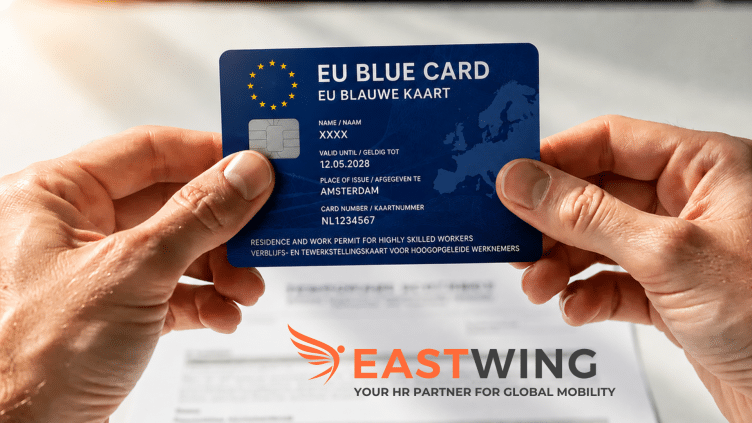
The EU Blue Card is an alternative, but has had limited success in the Netherlands due to relatively high salary requirements for recent graduates and lengthy procedures. The national highly skilled migrant scheme often offers better conditions with lower minimum salaries for recent graduates and faster procedures of just two weeks for recognised employers.
Family residence permit
Are you married to a Dutch citizen or someone with a Dutch residence permit? Then you can apply for a family reunification residence permit. You must demonstrate that your relationship is genuine and that there is sufficient income to support you both. You may also qualify if you are unmarried.
This type of residence permit is also possible when you are in a relationship with or married to a citizen of the European Union who lives or works in the Netherlands.
Study residence permit
Students from outside the EU need a residence permit to study in the Netherlands. Your educational institution must be recognised by the Dutch government. You must also demonstrate that you have sufficient financial means for your studies and living expenses.
Step-by-step process for your residence permit application
The application process at the IND follows a clear structure. Good preparation saves you time and prevents delays.
Preparing your application
Start by gathering all the required documents. Check that your passport is still valid for at least six months. For work permits, your employer often needs to first apply for recognition as a sponsor, which can take 8–12 weeks for companies that have existed for more than three years.
Submitting your application
You can submit your application online via the IND website or send a paper application. Online applications are often processed faster. Make sure all documents are complete and meet the IND requirements for translations and legalisation.
Processing by the IND
After submission, the IND checks your application for completeness. If documents are missing, you will receive a letter requesting additional documents. This can delay your procedure by weeks, so make sure everything is complete at the time of first submission.
Decision and next steps
If the decision is positive, you will receive a letter explaining how and where to collect your residence document. After arriving in the Netherlands, you must register with the municipality within 5 days to obtain your BSN (citizen service number). Depending on your nationality, a tuberculosis (TB) test may be required before you can use your residence permit. This test must be completed within 3 months of arrival.
Which documents are required for your application?
The document requirements for residence permit applications vary by permit type, but certain documents are standard requirements for almost all IND procedures. A complete document checklist prevents delays and significantly increases your chances of approval.
Basic documents for all applications
For every residence permit application, you always need a valid passport (valid for at least 6 months), a fully completed and signed application form, and recent passport photos that meet Dutch biometric requirements. Check in advance that your passport is valid for long enough to avoid delays.
Specific documents per permit type
For work permits, you need an employment contract, diplomas, and an employer’s declaration. For family residence permits, marriage certificates and birth certificates are required, which must be legalised or provided with an apostille. For EU Blue Card applications, foreign diplomas must be evaluated by Nuffic to determine the Dutch educational level equivalent.
Translation and legalisation
Documents that are not drawn up in Dutch, English, French, or German must be translated by a sworn translator. Certain documents also require legalisation or an apostille, depending on the country in which they were issued.
Costs and processing times for residence permit applications
The costs for residence permit applications at the IND vary considerably by permit type and personal situation. Good budget planning and a realistic timeline are therefore essential to avoid (financial) surprises during the application process.
Overview of costs
Fees for residence permits range from approximately €85 for certain family members to more than €423 for residence/work permits. On top of this come costs for document translation, legalisation, and any specialist advice. For recognised sponsors, the IND fees amount to €5,080, with a reduced rate of €2,539 for businesses that have existed for less than 1.5 years or have fewer than 50 employees worldwide.
Realistic processing times
The IND aims for a processing time of eight weeks for most applications, but in practice this can take longer. Highly skilled migrant permits via recognised sponsors are often processed within two weeks. For non-recognised sponsors, the process takes approximately eight to twelve weeks. Filipino employees need extra time for an Overseas Employment Certificate, which can extend the process by several months, but with good guidance can be completed within three weeks.
Factors affecting processing time
Incomplete applications, missing documents, and peak periods at the IND can delay your procedure. The complexity of your situation also plays a role. Straightforward cases are handled more quickly than applications requiring extensive review.
Common mistakes that can delay your application
Many applicants make the same mistakes, causing their procedure to be unnecessarily delayed. With the right knowledge, you can avoid these pitfalls.
Document-related mistakes
The most common mistake is submitting incomplete or incorrect documents. Expired passports, missing translations, or incorrect legalisations cause delays. Always check that your documents meet the current IND requirements before submitting your application.
Timing and planning mistakes
Many people underestimate the time the process takes. Start preparing well before your desired moving date. Take into account holiday periods and peak busy times at the IND, especially during the summer months and around the new year.
Communication with the IND
Always respond within the set deadline to requests for additional information. The IND can reject your application if you do not respond in time. Make sure your contact details are up to date so that you receive all correspondence.
What to do if problems arise
If your residence permit application is rejected by the IND, you have exactly six weeks to formally object to this decision. Read the IND rejection letter carefully to understand exactly why your application was refused and which documents were missing. In some cases, you can submit a completely new residence permit application with the correct documents instead of going through the objection process, which is often faster and more cost-effective.
Applying for a residence permit in the Netherlands requires careful preparation and knowledge of the process. By choosing the right type of permit, submitting complete documents, and avoiding common mistakes, you significantly increase your chances of a successful application. At Eastwing, we help companies and international employees through the complete immigration Netherlands process, from the initial permit application to final integration in the Netherlands. Our expertise in IND procedures and global mobility ensures that your application is correctly prepared and submitted. For personal advice, you can always contact us.