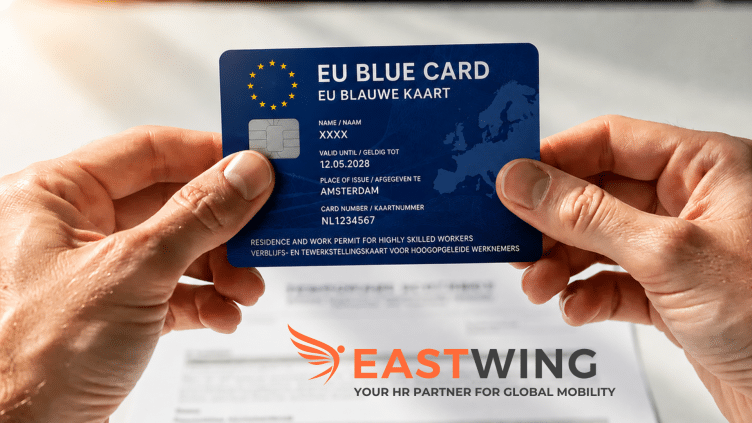


As an international professional considering working in the Netherlands, you have probably already come across the term expat ruling. This unique tax facility can make a significant difference to your net income and is one of the most important considerations when planning your career in the Netherlands. The expat ruling, formally known as 30% ruling offers international employees the opportunity to receive up to 30% of their gross salary tax-free.
For knowledge migrants and highly educated expats, this ruling often forms a crucial factor in the decision to move to the Netherlands. Understanding the conditions, the application process and the financial benefits are essential for making optimal use of this facility. In this article, we explain step by step how the expat ruling works, which conditions you must meet and how you can submit a successful application.
What exactly is the expat ruling?
The expat ruling is a Dutch tax facility that has been specially designed for international employees who come from abroad to work in the Netherlands. This ruling enables employers to pay up to 30% of the gross salary tax-free as compensation for so-called extraterritorial costs.
The historical background of this ruling lies in the Dutch effort to attract international talent and strengthen the country’s competitive position. By compensating for the higher cost of living that international employees experience when moving to the Netherlands, such as double housing costs, removal costs and other relocation-related expenses, the Netherlands aims to remain an attractive destination for highly educated professionals.
Within the Dutch tax system, the expat ruling functions as an exception to normal taxation. The tax-free part of the salary is considered as a cost allowance for the extra expenses associated with temporary residence in the Netherlands. This approach recognizes that international employees often face double costs and other financial burdens that local employees do not experience.
Conditions for the 30% ruling
To qualify for the expat ruling, you must meet a number of specific conditions. These criteria are strict and are carefully checked by the Dutch tax authorities with every application.
Salary threshold and specific expertise
You must earn a minimum gross salary that demonstrates that you possess scarce expertise. For 2026, this threshold amounts to €48,013 per year. For employees younger than 30 years with a qualifying master’s degree, a lower threshold of €36,497 per year applies. These amounts are adjusted annually and are exclusive of the expat ruling.
An important exception applies to scientific researchers who work at recognized research institutions, such as Dutch universities. In this case, no salary norm is applicable.
Distance requirement and recruitment
The distance requirement is one of the most complex conditions. You must have lived for at least 16 of the 24 months prior to your first working day in the Netherlands at more than 150 kilometers from the Dutch border (as the crow flies). This means that you may not have lived in Belgium, Luxembourg and parts of Germany, France or the United Kingdom.
In addition, you must have been recruited from abroad. This can be proven by signing your employment contract or accepting a job offer prior to your arrival in the Netherlands.
Employer obligations
Since the application is a mutual application by you and your employer, the employer must agree to filing for the application. Furthermore, the employer must agree on the expat ruling with the employee. An addendum to the contract is normally signed for this purpose. Are you or your employer not familiar with this addendum, feel free to reach out to Eastwing for further explanation and we could provide you with a template.
Application procedure and required documents
The application process for the expat ruling requires careful preparation and gathering of the correct documentation.
Required documents
For a successful application, you need the following documents:
- BSN
- Employment contract or secondment letter which is signed by you and your employer
- Company details and payroll tax number of your employer including sector code
- Proof of residence in another country prior to your appointment for more than 150 km outside of the Dutch border for 24 months
- Curriculum vitae which clearly shows your work and educational experience and employment history including the period and location
- An addendum to the employment contract in which the expat ruling is agreed upon
Timelines and processing procedure
The Dutch tax authorities has a processing time of one to six four months, depending on the complexity of your file. It is crucial to submit your application on time. If you submit an application within four months of the start of your employment, the ruling can be applied retrospectively from your first working day.
If your application is rejected, you can submit an objection within six weeks. If this objection is also rejected, the path to appeal to the court is open.
Financial benefits and calculation
The financial benefits of the expat ruling can be considerable, especially for employees with higher salaries. The tax benefit is calculated by exempting 30% of your gross salary from payroll and income tax.
It is important to note that since 2024, a cap on the compensation of the expat ruling up to the WNT/Balkenende norm (EUR 262,000 in 2026) is applicable. The expat ruling cannot be processed over the gross salary above this amount. In case the expat ruling is applicable for part of the year, then the maximum amount should be pro-rated as well. This means that the maximum tax-free allowance amounts to €78.600 in 2026.
Comparison with regular tax rates
For international employees without the 30% ruling, the standard Dutch tax rates apply. In 2026, the rate in the first bracket amounts to 35.75%, in the second bracket 37,56% and in the third bracket 49.50%. The expat ruling can therefore result in a significant reduction of your tax burden, especially in the higher income brackets.
Common mistakes and challenges
When applying for the expat ruling, the same problems regularly occur that can lead to rejection or delay. Recognizing and avoiding these common mistakes significantly increases your chances of a successful application.
Documentation and compliance risks
One of the most common causes of rejection is incomplete or incorrect documentation. Many applicants underestimate the importance of demonstrating the distance requirement. Ensure that you have sufficient proof of your place of residence in the 24 months prior to your Dutch employment.
Another common mistake is not correctly completing the CV. This document must clearly demonstrate your employment history, education and expertise. Ambiguities or gaps can lead to questions or rejection.
Timing and procedural challenges
The late filing of the application is a costly mistake. Many international employees only discover after months that they may qualify for the expat ruling. Although it is still possible to submit an application years later, the financial benefit of the first months is lost if you do not submit an application within four months of the start of your employment.
When changing employers, it is crucial to find a new job within three months and sign the employment contract. A new application needs to be filed with the Dutch tax authorities within four months to maintain continuity of the ruling. Please note that you still need to have met the salary norm of the expat ruling when signing the employment contract with your new employer.
More information?
It is advisable to seek professional advice for obtaining the expat ruling.
The expat ruling remains a valuable benefit for international professionals in the Netherlands but requires careful planning and compliance with all conditions. By preparing well and engaging the right expertise, you can make optimal use of this unique tax facility and make a successful start to your career in the Netherlands. For personalized guidance on your specific situation, contact our expert team to discuss your options.
Do you have any additional questions or need assistance? We are happy to help. Feel free to contact us at service@eastwing.nl.