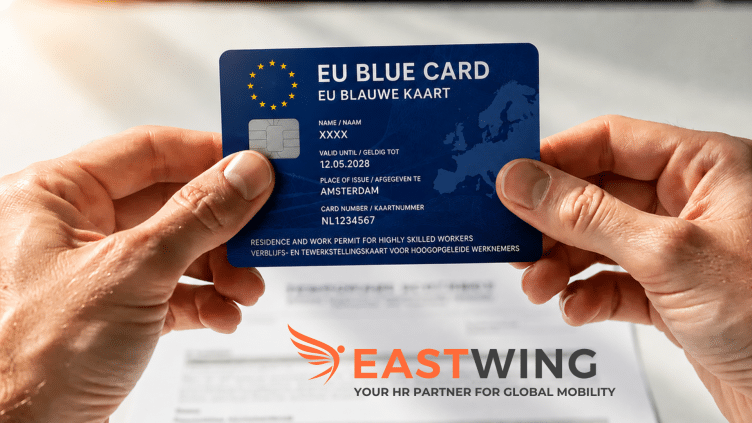


Yes, Eastwing can act as an Employer of Record (EOR) for a highly skilled migrant, even if your company is not itself a recognised sponsor with the IND. As legal employer and recognised sponsor, Eastwing takes on full sponsorship responsibility, allowing you to hire international talent immediately without first going through a lengthy registration process. The questions below explain step by step how this arrangement works and what it means for your organisation.
What is a recognised sponsor and who can fulfil that role?
A recognised sponsor is an organisation registered by the Immigration and Naturalisation Service (IND) as a trusted sponsor for migrants from outside the EU. Only recognised sponsors may apply for a residence permit for a highly skilled migrant. Without this status, it is not possible for an employer to legally employ someone from outside the EU via the highly skilled migrant route.
The IND grants recognised sponsor status to organisations that meet strict requirements: there must be an active, registered business in the Netherlands, the organisation must demonstrably be reliable, and must be willing to bear responsibility for compliance with the migrant’s residence obligations. Applying for and obtaining this status is a time-consuming and costly process that typically takes several months.
Recognised sponsors include large employers, knowledge institutions, and certified intermediaries such as EOR parties. Precisely because not every company can easily become a recognised sponsor, the EOR arrangement is a practical and fast solution for many organisations.
How does an EOR arrangement work when hiring a highly skilled migrant?
In an EOR arrangement for a highly skilled migrant, the EOR becomes the formal legal employer and the recognised sponsor of the employee. The EOR concludes the employment contract, applies for the residence permit with the IND, processes the salary, and takes care of all statutory obligations. Your organisation remains responsible for day-to-day management and the content of the work.
In concrete terms, the process proceeds as follows:
- Your organisation selects a suitable candidate from outside the EU.
- The EOR draws up a locally valid employment contract that complies with Dutch legislation and IND requirements.
- The EOR, as recognised sponsor, submits the application for the residence permit to the IND.
- After approval, the EOR assists the employee with settling in the Netherlands, including registration and onboarding.
- The EOR continuously handles payroll processing, tax remittance, and compliance with employment law obligations.
It is important to note that the highly skilled migrant must meet the applicable income threshold. For 2026, this is a minimum of approximately €5,942 gross per month for employees aged 30 or older, and a minimum of approximately €4,357 gross per month for employees under 30, excluding 8% holiday allowance. The EOR verifies that the offered salary meets this threshold before the permit application is submitted.
In addition, the EOR service in the Netherlands is regularly combined with an application for the 30% ruling. This tax facility makes it possible to pay up to 30% of the salary tax-free as compensation for the additional costs associated with working abroad. The EOR can also guide this process, making the overall employment conditions more attractive for the highly skilled migrant.
Can an EOR act as recognised sponsor for a highly skilled migrant?
Yes, an EOR that is itself registered as a recognised sponsor with the IND can fully take over this role from your organisation. The EOR then becomes both the legal employer and the formal sponsor of the highly skilled migrant, and bears all associated responsibilities. This is a legally permitted and widely used arrangement in Dutch practice.
This solution is specifically intended for situations in which a company:
- is not (yet) registered as a recognised sponsor with the IND;
- does not have its own legal entity in the Netherlands;
- wants to hire international talent quickly without first going through a lengthy registration process;
- wants to explore the market or hire temporary staff before setting up its own establishment.
In practice, the employee works exclusively for your organisation, but is formally employed by the EOR. This distinction is essential: the EOR bears the legal and administrative employer risk, while your organisation remains the actual client. The IND accepts this arrangement, provided the EOR is demonstrably registered as a recognised sponsor and meets all IND requirements.
What are the advantages of an EOR solution for companies without a recognised sponsor status?
The greatest advantages of an EOR solution for companies without recognised sponsor status are speed, cost savings, and full compliance. Instead of waiting months for their own IND registration, you can hire a highly skilled migrant through an EOR within a few weeks. This makes the EOR arrangement particularly attractive for growing companies and organisations hiring international talent for the first time.
The advantages at a glance:
- Fast market entry: setting up your own legal entity and obtaining recognised sponsor status can take six to twelve months; through an EOR you start within days to weeks.
- Cost savings: you avoid the costs and administrative burden of setting up your own entity and going through the IND registration process.
- Full compliance: the EOR bears responsibility for compliance with employment law, tax rules, and IND obligations, including the risk of fines for non-compliance.
- Streamlined HR administration: onboarding, payroll processing, tax remittance, and pay slips are all handled entirely through the EOR.
- Access to the 30% ruling: the EOR can include the application for this tax facility directly in the onboarding process.
- Flexibility: the EOR arrangement can serve as an intermediate step until your organisation becomes a recognised sponsor itself or sets up its own entity.
What obligations remain for the client in an EOR arrangement?
Even in an EOR arrangement, your organisation as client remains responsible for the day-to-day management of the highly skilled migrant, the content of the work, and team performance. The EOR takes over the legal and administrative employer role, but the actual employment relationship takes place within your organisation. This distinction is important both practically and legally.
In concrete terms, this means your organisation remains responsible for, among other things:
- determining the tasks, objectives, and working conditions of the highly skilled migrant;
- informing the EOR in a timely manner of changes in the employment relationship, such as changes in role or termination of the collaboration;
- complying with the agreed employment conditions that the EOR formally implements;
- ensuring a safe and healthy working environment in accordance with Dutch occupational health and safety legislation;
- being transparent with the EOR about the activities and working situation of the highly skilled migrant, so that the EOR can correctly fulfil its IND obligations.
It is also important that your organisation notifies the EOR in a timely manner if the highly skilled migrant ceases their activities or if the collaboration is terminated. The EOR, as recognised sponsor, is obliged to report this to the IND within four weeks, and a late or incorrect notification can have consequences for the employee’s residence permit and for the EOR’s reputation with the IND.
How Eastwing helps with hiring highly skilled migrants through an EOR arrangement
Eastwing helps companies that want to hire international talent but are not themselves a recognised sponsor with the IND. As EOR, Eastwing acts as legal employer and recognised sponsor, so you can start hiring highly skilled migrants from outside the EU immediately. This is what Eastwing arranges for you:
- Drawing up a locally valid employment contract that complies with Dutch legislation and IND requirements
- Applying for the residence permit as recognised sponsor with the IND
- Full payroll processing, including tax and social security contributions
- Support with the application for the 30% ruling
- Ongoing compliance with changes in employment law and IND regulations
- Support with onboarding and, where necessary, offboarding of the highly skilled migrant
Would you like to know whether an EOR arrangement through Eastwing is the right solution for your situation? Get in touch and discuss your specific situation with one of our specialists.
Frequently Asked Questions
How long does it take before a highly skilled migrant can actually start working through an EOR arrangement?
Through an EOR such as Eastwing, a highly skilled migrant can typically start within two to six weeks, depending on the completeness of the documentation and the processing time at the IND. The IND applies an accelerated procedure of a maximum of two weeks for recognised sponsors, which is considerably faster than the standard procedure. It is therefore important to provide all required documents — such as a valid passport, diplomas, and a signed employment contract — to the EOR as early as possible.
What happens to the highly skilled migrant's residence permit if the collaboration with my organisation is terminated?
If the collaboration is terminated, the EOR as recognised sponsor is obliged to report this to the IND within four weeks. After this notification, the highly skilled migrant generally has three months to find a new employer or residence title. It is crucial that you inform the EOR directly and in a timely manner about a termination, so that the statutory reporting obligation can be fulfilled correctly and on time, and the employee has sufficient time to arrange their situation.
Can I also hire a highly skilled migrant through an EOR arrangement who is already residing in the Netherlands on a different residence title?
Yes, this is possible in many cases. If the candidate is already residing in the Netherlands — for example on the basis of an orientation year, a partner visa, or another residence permit — the EOR can apply for a change of residence purpose with the IND to switch to highly skilled migrant status. The EOR assesses on a case-by-case basis which procedure applies and whether the salary and other conditions meet the IND requirements for the new residence title.
What are the most common mistakes companies make when hiring a highly skilled migrant without a recognised sponsor?
A common mistake is that companies try to employ a highly skilled migrant without being a recognised sponsor themselves, or without engaging an EOR in a timely manner, resulting in the employee being illegally employed. Other common mistakes include offering a salary just below the applicable income threshold, failing to report changes in the employment relationship to the IND in a timely manner, and underestimating the documentation requirements. By working with a specialised EOR at an early stage, you avoid these risks and prevent fines or revocation of the residence permit.
Is an EOR arrangement also suitable if I ultimately want to employ the highly skilled migrant directly?
Absolutely, the EOR arrangement is often used in practice as a temporary intermediate step. While the highly skilled migrant is already working through the EOR, your organisation can simultaneously begin the process of becoming a recognised sponsor with the IND or setting up its own legal entity in the Netherlands. Once your organisation has obtained that status, the employment contract can be transferred from the EOR to your own company, with the EOR typically guiding this transition process.
Does the 30% ruling automatically apply to all highly skilled migrants hired through an EOR?
No, the 30% ruling does not apply automatically; the employee must meet specific conditions, including a minimum salary threshold (in 2026 approximately €46,660 gross per year, excluding the tax-free allowance), demonstrable scarce expertise, and the requirement that the employee lived more than 150 kilometres from the Dutch border in the 24 months prior to taking up employment. The EOR assesses during onboarding whether the highly skilled migrant meets these conditions and, where applicable, handles the application with the Dutch Tax Authority.
What are the costs of an EOR arrangement for hiring a highly skilled migrant in the Netherlands?
The costs of an EOR arrangement typically consist of a monthly service fee on top of the employee’s gross salary, plus any one-off costs for applying for the residence permit and support with the 30% ruling. The exact costs vary per EOR provider and depend on the complexity of the situation, the salary level, and the desired level of service. Despite these costs, the EOR arrangement is financially more advantageous for most companies than setting up their own entity and going through the IND registration process, particularly in the short to medium term.