
The Netherlands has different types of residence permits because each purpose of stay comes with its own requirements and conditions. Whether you are coming to work, study, or be with family, there is a specific residence permit that fits your situation. The Immigratie- en Naturalisatiedienst (IND) assesses every application according to the rules that apply to the type of permit. This guide helps you understand what options are available and which residence permit best suits your plans in the Netherlands.
Why are there different types of residence permits in the Netherlands?
The Dutch immigration system and residence permits works with different categories of residence permits because each purpose of stay has unique requirements. The IND uses this classification to ensure that people coming to the Netherlands meet the conditions that match their situation.
The system is built around four main categories: work, study, family reunification, and special circumstances. Each category has its own rules regarding income, housing, insurance, and other practical matters. This helps the government regulate immigration and ensures that people receive the right guidance.
The legislation behind this categorization stems from European directives and Dutch policy objectives. The Netherlands wants to attract talent, welcome students, and reunite families, but within controlled frameworks. That is why each Dutch residence permit has specific criteria that align with the intended purpose of the stay.
Residence permits for work: what options do you have?
For working in the Netherlands, different residence permits exist depending on your role, salary, and employer. The best known is the highly skilled migrant scheme, intended for highly educated employees with a salary above certain thresholds.
Employers can act as a recognised sponsor for various work residence permit categories:
- Highly skilled migrants: For highly educated individuals with a salary of at least €5,688 per month, or €4,171 if under 30 years of age (2025)
- ICT permits: For employees who are temporarily transferred within the same company
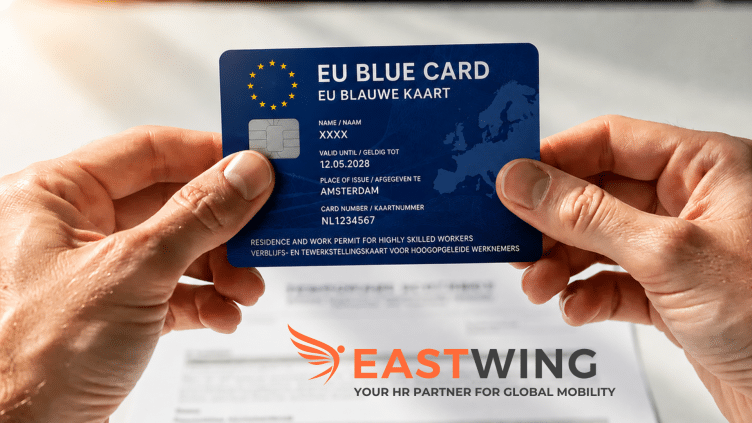
- EU Blue Card: For highly educated individuals from non-EU countries
- Seasonal work: For temporary work in specific sectors
- Self-employed: For entrepreneurs starting their own business
Recognised sponsors can submit applications to the IND more quickly. The processing time for their applications is usually within two weeks, while regular procedures take longer. Companies that have existed for more than three years can more easily become a recognised sponsor than new businesses.
Study and training residence permits in the Netherlands
For education in the Netherlands, different residence permits exist that align with the type of programme and the duration of your studies. Educational institutions must be recognised by the IND in order to receive international students.
The main study residence permit categories are:
- Higher education: For bachelor’s, master’s, and PhD programmes at recognised institutions
- Exchange: For temporary study programmes and exchange projects
- Research: For PhD candidates and researchers at universities
- Internships: For practical experience as part of a study programme
Financial requirements vary by type of programme. You must demonstrate that you have sufficient funds for living expenses and study costs. For higher education, the amount is usually approximately €11,000 per year. After your studies, you may, under certain conditions, switch to a work permit through the orientation year for highly educated graduates.
Family reunification and family residence permits
Family reunification makes it possible to bring family members to the Netherlands. The rules differ depending on your relationship to the person already living in the Netherlands and their status.
For family residence permit applications, the following main categories apply:
- Partners: For married and unmarried partners, including registration of the partnership
- Children: For minor children and, under certain conditions, adult children
- Parents: In special circumstances for dependent parents
- Other family members: Very limited and only in exceptional situations
Income requirements are important in family reunification. The person in the Netherlands must usually have an income of at least 120% of the statutory minimum wage. Suitable housing must also be available. The procedure takes an average of three to six months, depending on the complexity of the situation.
Which residence permit suits your situation?
Choosing the right residence permit depends on your personal circumstances, your purpose in the Netherlands, and your background. Start by identifying your main reason for coming to the Netherlands.
Use these practical considerations:
- For work: Check your salary level, education, and whether your employer is a recognised sponsor
- For study: Verify whether your educational institution is recognised and calculate your financial needs
- For family: Determine your relationship to the person in the Netherlands and their income
- For switching: Enquire about the possibilities of changing from one type of permit to another
Common situations require professional guidance due to complex regulations. This applies in particular to residence permit applications where multiple options are possible or when your situation is not straightforward. Consider seeking assistance if you are unsure about the best route or if your application has specific complications.
The Dutch immigration system offers different routes to a residence permit, each with its own advantages and requirements. By making the right choice from the start, you increase the likelihood of a successful application and a smooth start in the Netherlands. At Eastwing, we help companies and individuals find the best route and handle all processes correctly, so that international mobility is straightforward and legally sound. For questions about your specific situation, you can contact us.