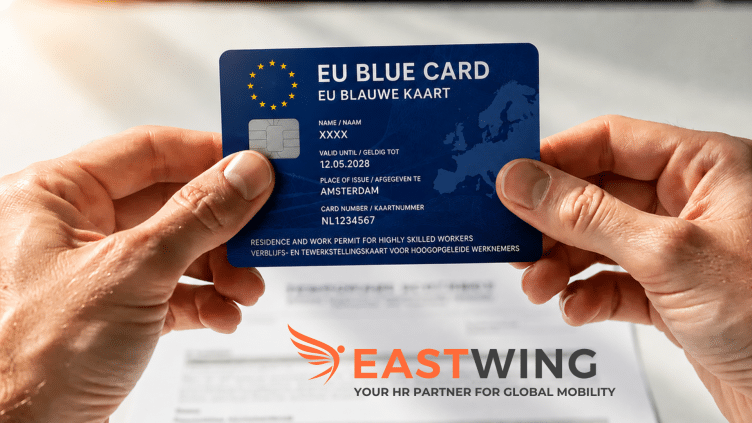


Yes, you can switch EOR provider while the employee remains employed. The employee does not need to be dismissed for this, but a careful legal process is required in which the existing contract is terminated and a new contract is concluded with the new EOR. How this works exactly, what risks are involved, and what to watch out for, you can read in the answers below.
What happens to the employment contract when switching EOR?
When switching EOR, the employment contract with the current Employer of Record ends and a new contract is concluded with the new EOR provider. The employee effectively continues doing the same work for your organization, but the legal employer changes. This requires formal termination of the old employment and a new onboarding.
Because an EOR is the legal employer, the employment agreement is in the name of the EOR party. Transferring the contract to another EOR is not a simple name change from a legal perspective. In most cases, the following process is followed:
- The current EOR terminates the employment contract in consultation with all parties.
- The new EOR concludes a new employment contract with the employee.
- The client concludes a new service agreement with the new EOR.
- Ongoing arrangements, such as the 30% ruling or a highly skilled migrant permit, are transferred or reapplied for.
An important point of attention is the employment history. When contracts succeed one another, the so-called chain rule (ketenregeling) may apply. Under the Dutch Labor Market in Balance Act (WAB), after a maximum of three temporary contracts within three years, the next contract automatically becomes a permanent contract. If the employee has already had multiple temporary contracts, you must carefully assess the consequences for the contract type when switching.
Can an employee refuse to switch EOR provider?
Yes, an employee can in principle refuse to switch EOR provider. Because a new employment contract with a different legal employer is involved, the employee’s consent is required. Without that consent, the switch cannot be carried out without legal complications.
In practice, employees’ willingness to cooperate depends strongly on communication and the employment conditions offered. An employee is more likely to agree if:
- the employment conditions remain the same or improve;
- the transition is communicated clearly and in a timely manner;
- ongoing arrangements, such as the 30% ruling, are continued;
- the employee receives certainty about their residence status (relevant for highly skilled migrants).
For employees with a highly skilled migrant permit, the situation is particularly sensitive. The permit is linked to the current EOR as a recognized sponsor with the IND. When switching, the new EOR must also be a recognized sponsor and a new or amended permit must be applied for. If that process does not go smoothly, the employee’s residence status may be temporarily at risk, which is an understandable reason for hesitation.
How long does it take to switch EOR provider?
An EOR switch takes an average of four to twelve weeks, depending on the complexity of the situation. The lead time is determined by factors such as the notice periods in the existing contract, the speed with which the new EOR can draw up an employment contract, and whether additional permits or tax arrangements need to be transferred.
The greatest time savings or time losses are typically found in the following components:
- Notice period: The current EOR applies a contractual notice period, both towards the client and sometimes towards the employee.
- IND process: For highly skilled migrants, a new permit application or amendment of the sponsor details can take several weeks.
- 30% ruling: If the employee makes use of the expat ruling, it must be verified whether the ruling can be continued or must be reapplied for with the Dutch Tax Authority.
- Onboarding new EOR: The new provider needs time for contract drafting, payroll administration, and any compliance checks.
Plan the switch well in advance and coordinate the timing with all parties to prevent gaps in salary payment or residence status.
What are the costs of switching EOR provider?
The costs of an EOR switch consist of two components: the exit costs with the current provider and the onboarding costs with the new provider. In addition, there may be indirect costs for legal advice, re-registration with the IND, or reapplying for tax arrangements.
Take the following cost items into account:
- Exit fee or notice period: Some EOR providers charge a fee for early termination of the service agreement.
- Onboarding costs new EOR: One-time setup costs for establishing payroll administration and drafting contracts.
- IND costs: For a new highly skilled migrant permit or amendment of sponsor details, the IND charges fees.
- Legal advice: If the situation is complex, for example in the event of a dispute about contract history or employment conditions, legal advice is advisable.
- Indirect costs: Consider the internal time that HR and finance spend on coordinating the transition.
Total costs vary greatly per situation, but by preparing the switch thoroughly and communicating transparently with all parties, you can limit unnecessary additional costs.
What are the risks of switching to a different EOR?
The biggest risks when switching to a different EOR are an interruption of salary payment, loss of the employee’s residence status, and the unintended creation of a permanent contract due to the chain rule. Those who map out these risks in advance can largely manage them.
Risks for the employee
For employees with a temporary contract, it is essential that the contract succession is carefully documented. If the gap between the old and new contract is too short, the contracts count towards the chain and a permanent employment relationship may arise sooner than intended. For highly skilled migrants, the risk of a temporary gap in the residence permit is real if the IND procedure is not completed in time.
Risks for the client
For the hiring organization, the main risks are: continuity risk if the employee refuses to cooperate, liability risk if the employment transfer has not been carried out correctly from a legal perspective, and reputational risk if the employee feels they have not been properly supported. An inadequate transfer of the 30% ruling can also result in higher payroll tax for the employee, leading to dissatisfaction.
How do you choose the right new EOR provider for international employees?
The right new EOR provider for international employees combines legal expertise in the relevant country, experience with immigration processes, and a proven track record in guiding EOR switches. Price is a factor, but continuity and compliance certainty carry more weight.
Pay attention to the following criteria when selecting:
- Recognized sponsor with the IND: If you employ or wish to employ highly skilled migrants, the new EOR must be registered as a recognized sponsor with the Immigration and Naturalisation Service (IND).
- Experience with the 30% ruling: The provider must know how an existing ruling is continued and when a new application is required. Specific salary standards for highly skilled migrants apply for 2026, and a good EOR is aware of these.
- Transparent contracts: Check the exit provisions before signing, so that a possible future switch does not become costly and complex again.
- Local employment law knowledge: The provider must have thorough knowledge of Dutch employment legislation, including the WAB, the chain rule, and the rules surrounding payrolling and permanent contracts.
- Communication and onboarding: A smooth transition stands or falls with clear communication towards the employee. Ask about the onboarding process and how the provider supports the employee.
Request a quote from multiple providers and ask them to specifically address how they take over an existing EOR arrangement. This gives you a realistic picture of their experience with exactly this type of situation.
How Eastwing helps with switching EOR provider
An EOR switch touches on employment law, immigration, and tax arrangements simultaneously. Eastwing helps organizations that work with international employees to approach this process in a structured and risk-conscious manner. Concretely, this means:
- Insight into the legal consequences of the switch for existing contracts and the chain rule.
- Guidance on the transfer or renewed application of the highly skilled migrant permit and recognized sponsorship.
- Advice on the continuity of the 30% ruling under the new EOR arrangement.
- Support with communication towards the employee, ensuring cooperation is secured.
- Selection guidance when choosing the new EOR provider that suits your situation.
Would you like to know what an EOR switch means in your specific situation? Get in touch and we will be happy to think along with you.
Frequently Asked Questions
What happens to the accrued vacation days and other entitlements of the employee when switching EOR?
When switching EOR, the employment relationship formally ends, which means the current EOR must pay out or transfer the outstanding vacation days and any accrued entitlements. It is strongly advisable to make written agreements about this in advance with both the current and the new EOR. Make sure the new contract explicitly states which entitlements are carried over, so the employee does not end up worse off.
What if the employee is in the middle of an ongoing 30% ruling — will that ruling be lost?
Not automatically, but it does require action. The 30% ruling is personal and linked to the employer (in this case the EOR). When switching, it must be assessed whether the ruling can be continued via a request for amendment with the Dutch Tax Authority, or whether a new application is required. Crucially, there must be no interruption of more than three months between the old and new employment, as this can lead to loss of the remaining duration of the ruling.
Can I as the client be held liable if the EOR switch is not carried out correctly?
Yes, that risk exists. Although the EOR is the legal employer, a client who is actively involved in a careless transfer may face claims in the area of employment law or immigration law. Think of situations where the employee suffers harm due to an interruption in the residence permit or an error in salary payment. Seeking legal advice before the switch is therefore not a luxury, but a necessity.
How do I best discuss the EOR switch with the employee without causing unrest?
Transparency and timing are decisive here. Inform the employee as early as possible, explain why the switch is taking place, and emphasize that their employment conditions will be safeguarded. Give the employee the opportunity to ask questions and involve them actively in the process, for example by introducing the new EOR and going through the onboarding process together. Employees who feel well informed and heard will cooperate much more quickly and smoothly in practice.
Is it possible to transfer multiple employees to a new EOR provider at the same time?
Yes, that is possible and in practice even more efficient if you have several international employees employed through the same EOR arrangement. The new EOR can set up a standardized onboarding process for the entire group, saving time and costs. Do note that each individual case must be assessed separately in terms of contract history, residence status, and tax arrangements — a group approach does not replace individual due diligence.
Which documents do I need to gather before initiating the switch to a new EOR?
Make sure that before the start of the switching process you have the complete contract history of the employee (including previous temporary contracts), the current 30% ruling decision, the highly skilled migrant permit with expiry date, and the service agreement with the current EOR including exit provisions. These documents are essential for the legal assessment of the situation and prevent surprises during the process.
What is the difference between an EOR switch and employing the employee yourself through your own Dutch entity?
With an EOR switch, you continue to use an external legal employer, which offers flexibility without the administrative burden of your own entity. Employing the employee yourself through your own Dutch B.V. or establishment gives more direct control, but brings considerably more obligations in the area of payroll administration, employment law, and compliance. An EOR arrangement is particularly suitable if you want to employ a limited number of international employees in the Netherlands without setting up a fully-fledged local entity.